
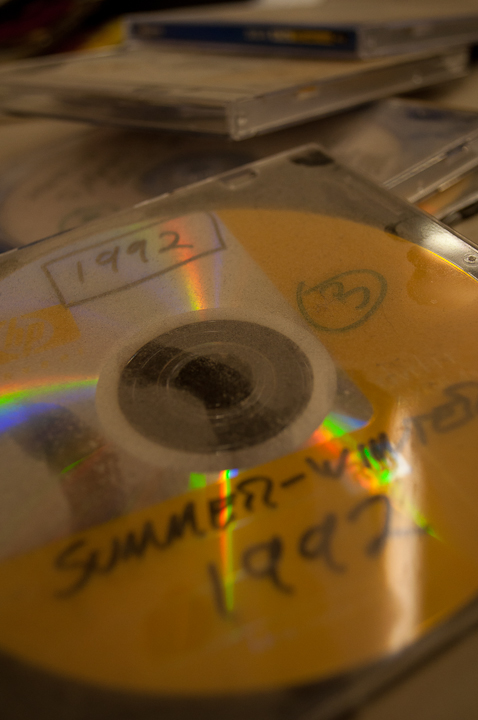
Yesterday, I spent the whole day copying home movies off of DVDs onto my computer hard-drive. I was doing this as an act of historical preservation, one of many that I have done over the years. As I was feeding disk after disk into the computer, I reflected on the effort needed to fight the ravages of time …
Pop Quiz: Name Your Great Grand-Mother
As my family’s self-appointed archivist, I have taken it upon myself to capture my family’s narrative, images and memories. Over the years I have developed an extended family tree, have recorded miles of video tape, have transcribed thousands of words of narrative, have interviewed family members on audio tape and have taken thousands of pictures. I have also documented a mission of rediscovery where I joined my father on a trip to Poland to visit the village and the people who saved him during the war.
As the child of a holocaust survivor, I know too well that the memory of people and of entire human societies easily vanish. I have made it my mission to capture and record as much personal history as I can. I now know quite a bit of my parent’s story. Less of my grandparents. And sadly, still almost nothing of my great-grandparents. This is true of most people I know, and we are the poorer because of it. So, for the sake of my children (and their children), I have adopted this archivist quest so they don’t suffer from historical myopia where only the last generation or so is in view at any one time.
A Menagerie of Media
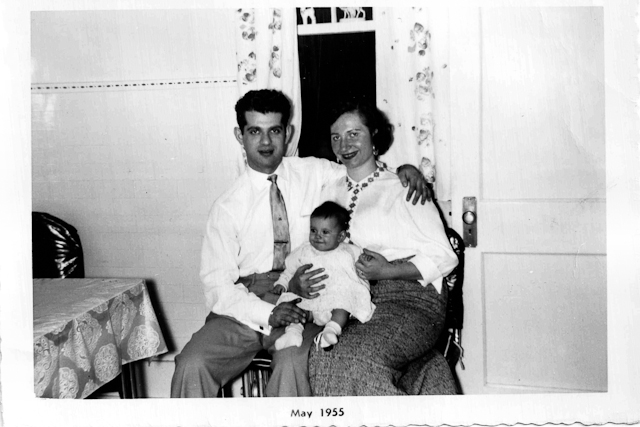
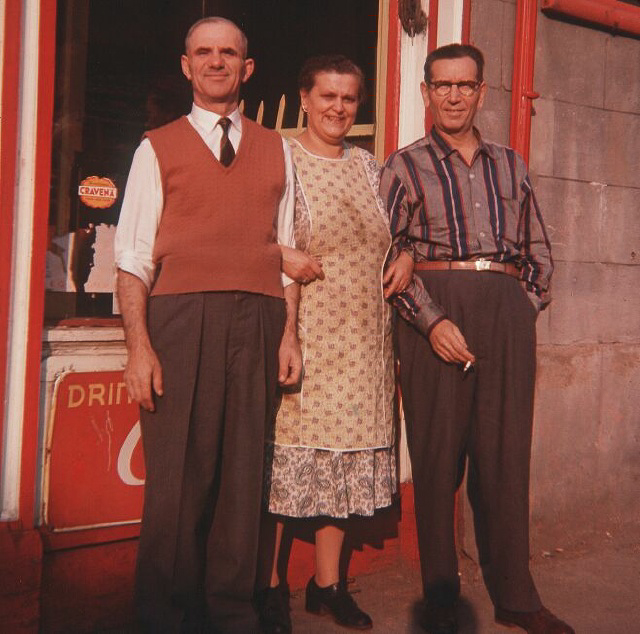
Starting in the early 80’s, I started taking photos on cheap point-and-shoot cameras and gathering the prints into albums. At the time, film negatives were a nuisance and sadly were never kept. Later that decade, I moved to 35mm slide film for the superior quality and the experience of viewing images up on a big screen. My grandparents and my uncle had taken beautiful B&W photos and large format colour slides, so I also gathered and cataloged these as well.
 |
 |
In the late 80’s I bought a film camera that used state-of-the-art cassette tapes. I took hours of video of my sons growing up, family events and of goofy canoe trips with my friends. During the 1990’s I upgraded to a 35mm still camera and to a move compact video camera. In the 2000’s I upgraded again to digital cameras and digital video.
 Video Cassette Video Cassette |
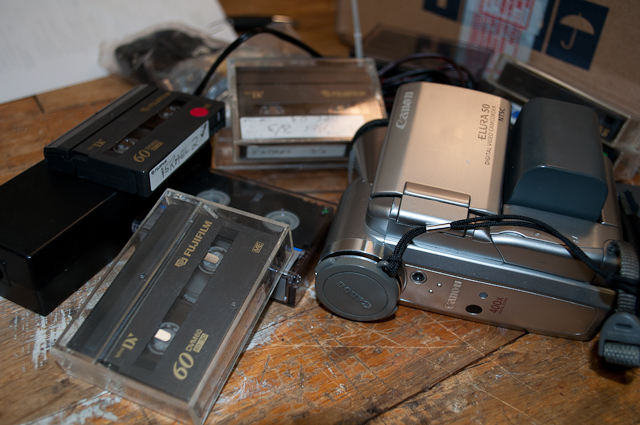 Video Mini-Cassette Video Mini-Cassette |
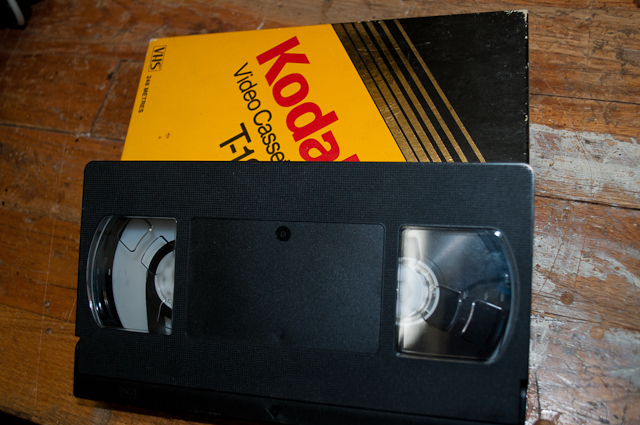 VHS VHS |
 Paper Photos Paper Photos |
 35mm Slides 35mm Slides |
I also gathered old letters, official documents, postcards and other gems of the lives of my parents and grandparents.
 |
 |
My wife is my co-crusader in the fight against the ravages of time and memory. She keeps a daily diary, writing her life’s story and the interplay of her family and friends. Every night she writes a page or two. Every year, she starts a new volume. In the basement are boxes with over 30 volumes, as she has been writing without pause since she was nine years old.
Entropy Never Sleeps
Paper letters, diaries and photographs along with magnetic tape and plastic DVDs all have life spans determined by physical forces. According to the experts, well managed, acid-free cotton or linen paper can last over 500 years. Magnetic tape has 25 years before the content is at risk. Interestingly, even DVDs are not expected to last more than 50 years. But even these numbers can be optimistic. The content stored on these physical materials are subject to local destruction; the entire Library of Alexandria went up in smoke after only 250 years in existence, even though the papyrus and vellum scrolls in it probably could have lasted much longer.
What is the best to store these historical treasures? My answer is threefold:
- digitize the material to mitigate physical degradation of the media over time
- relentlessly adapt the digital content to newer storage media as technology advances makes previous storage media obsolete
- physically disperse the content to mitigate the forces local destruction (purposeful or accidental)
So, besides the oral tradition of telling stories, the only real hope of keeping my family’s history alive is to digitize it, transform it from time-to-time and to disperse it.
Network Storage and Cloud Storage
Hard disk are mechanical machines. Their parts wear and then crash. It’s not a question of if, but only of when. A solution to this issue is to set up a storage scheme where two or more hard disks have mirrored content. In that way, if one of them crashes, the other has a complete copy of all the information. Then, you just replace the defective hard-disk, and the set of content is copied across. Now you are back to steady-state again. I have set this system up in my house using a consumer device called DLink DNS-323. It is a little box connected to my network with a pair of hard disk in it. Software running on all the computers in the house continually copy important files from the local hard-drives over to the DNS-323. If a computer hard-drive were to crash, we could restore the content from the DNS-323 after replacing the hard-drive. Even if a file is mistakenly erased, we can get it back from the DNS-323.
But this isn’t just a disk-in-a-box. The DNS-323 is a dual-disk device. If a disk in the DNS-323 were to crash, our back-up information wouldn’t be lost. That is because the other disk in the box has a perfect copy. I can simpley swap out the defective disk for a new disk and the content from the other disk will be automatically copied over.
 Hard disk redundancy on the network
That’s a good step to preserving important family memories, but it doesn’t address the need to physically disperse content. Remember, everything in a building is at risk in a theft or fire, even dually-redundant hard-disks put in place by skilled geeks.
The current best practice in information storage is to put your content in the cloud. What this means in practice is that your content will reside on redundant and backed-up hard-disks connected to one or more servers somewhere in the USA. So, if your local copy of your content is damaged or destroyed, you can (in theory) simply download a copy from your cloud storage provider. Mind-you, all of this is contingent on keeping up your annual payments, having your provider stay in business throughout the years, and having the fabric of our society staying together so that services like these don’t end up like the Library of Alexandria. Admittedly, these are a lot of assumptions. So, realists that I am, I consider the cloud to be a medium-term solution to the problem of content preservation.
There are plenty to choose from, but I ended up signing up with a service called Crash Plan. I have set up my family computers so that they all copy important content to both the DND-323 and the Crash Plan servers in the cloud.
 Only 6 months to go before all my home videos are uploaded ….
You have to have some patience with this set up. The connection between our house and the Crash Plan servers (in Minnesota, they tell me) is through the family Internet DSL connection. With 400GBytes of video data queued to upload through only 400Kb/sec of upload bandwidth, this initial process is going to take over 6-months!
One thing about history is that it teaches us patience.



 Riesenbach.com


Leave a comment